Practical guide
El Paraigua Barcelona: visit guide
How to find El Paraigua, what the bar and cellar are, how long the show runs, what to wear and what you will see and hear.
See El Paraigua dates on GetYourGuide ↗Quick answer
El Paraigua is at Carrer del Pas de l'Ensenyança 2 in Barcelona's Gothic Quarter, near the Jaume I (L4) and Liceu (L3) metro stations. A bar with tapas is at street level, and the flamenco is in the cellar below. The show lasts 50 minutes, needs no Spanish, and the venue sets no dress code. Your booking calendar and confirmation show the time.
Finding the door
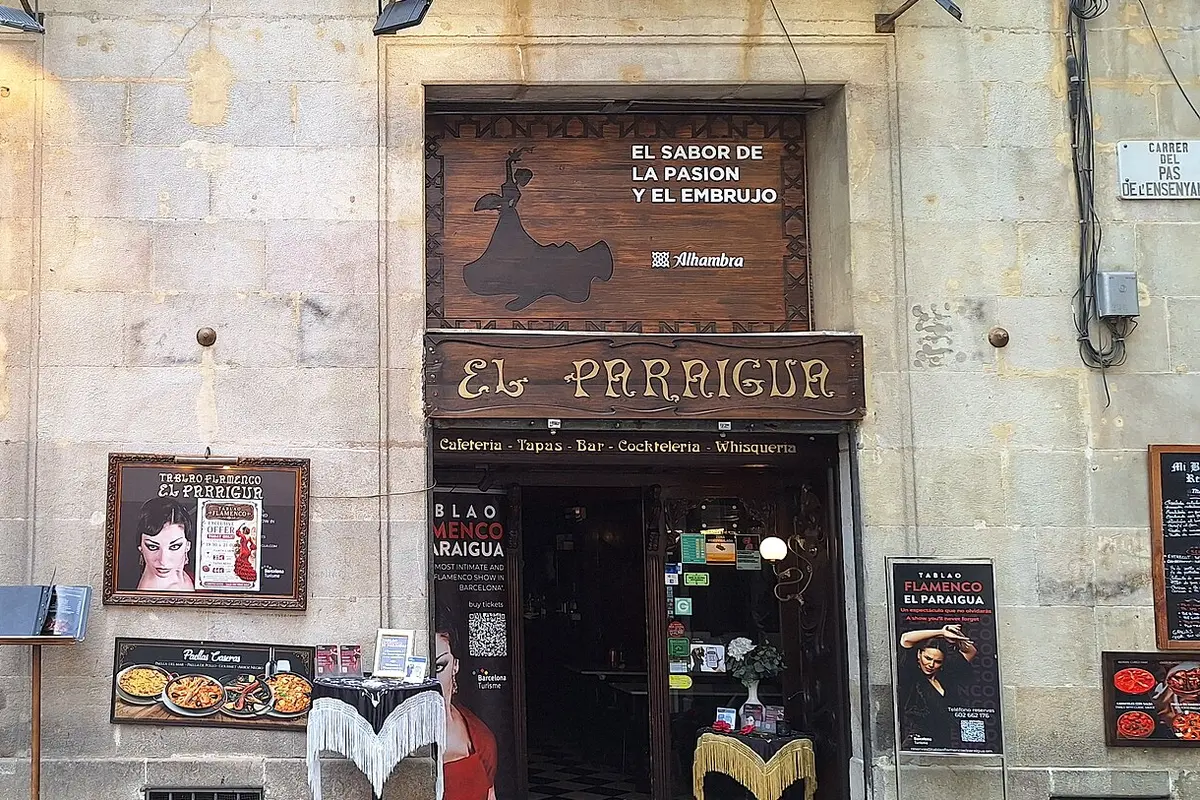
The address is Carrer del Pas de l'Ensenyança 2, 08002 Barcelona. The venue's contact page gives two metro stations: Jaume I on line 4 and Liceu on line 3. The Gothic Quarter runs from La Rambla to Via Laietana and has a labyrinthine street plan, and most of it is closed to regular traffic, though taxis and service vehicles can enter. Use the address above together with the arrival instructions on your confirmation. The venue says Las Ramblas, the Cathedral and Plaça Reial are within walking distance, so a walk through the old town is a reasonable way to arrive.
The bar upstairs and the cellar below
El Paraigua is two spaces in one building. The upper level, at street level, is a bar where you can have a drink or tapas, and the venue says it is open every day. The lower level holds the flamenco tablao, a vaulted room. You go down to the cellar for the show. Your drink and any extra drinks are served at the venue. Your confirmation says when to arrive, so follow that rather than general advice, and leave yourself time to find the entrance on the lane.
A convent, then a fan and umbrella shop
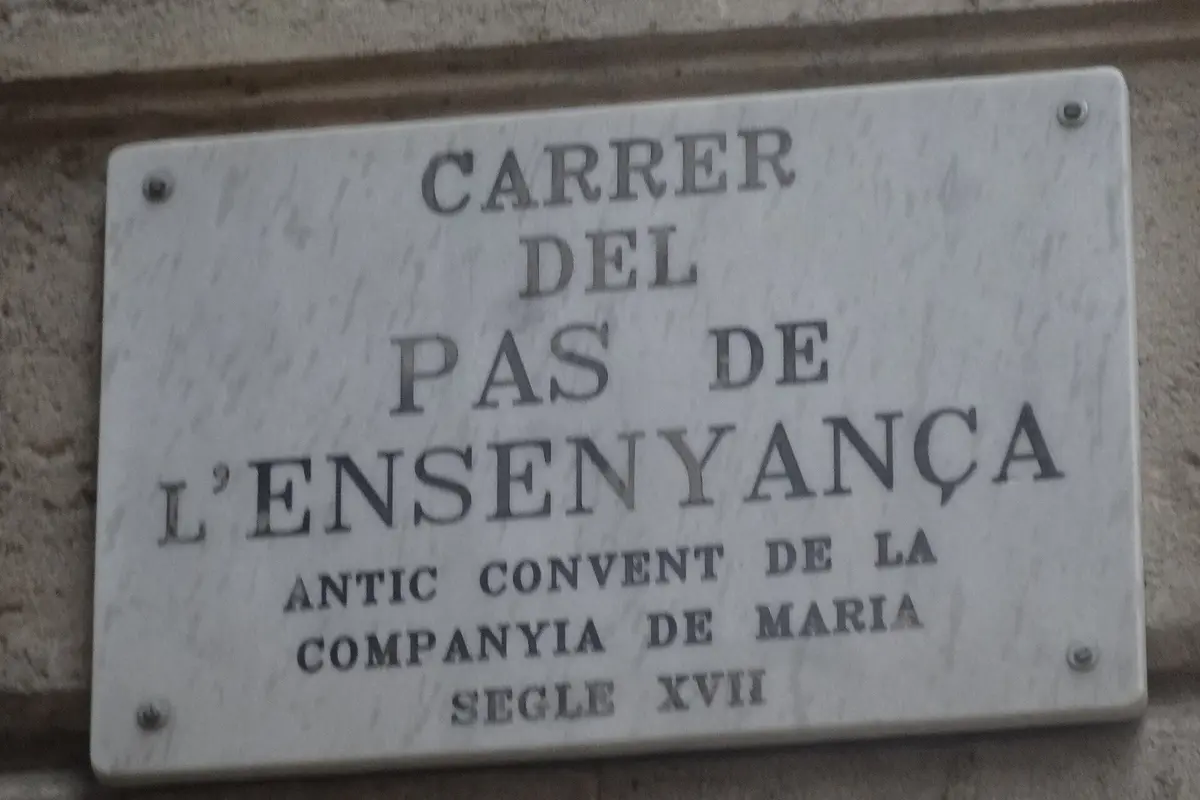
The venue says the building was once a convent of nuns who taught, which is why the street has the name Pas de l'Ensenyança. It later became a fan and umbrella shop, and it now carries modernist decoration. The venue's blog adds that the cellar is said to keep its original floor, vaults and stone walls. Descriptions differ on the detail: some call the building a monastery, while the street plaque and the venue say convent. The plaque places the former convent in the 17th century. The modernist decoration belongs to Catalan modernism, a movement of the late 19th and early 20th centuries.
How long it runs and how the evening goes
The show lasts 50 minutes. The venue describes daily shows, with a programme that changes every week, so there is no single fixed line-up to plan around. The ticket includes one drink, and the venue says you can order more during the breaks between performances. This guide gives no clock times, because the booking calendar shows the time for your date and your confirmation repeats it. Since the show is short, it leaves room for tapas or dinner before or after, and the bar upstairs is open for lunch, dinner and drinks if you want to stay.
Dress, phones and when to clap
The venue's FAQ sets no dress code, so wear what is comfortable for an evening out in the old town. It does not cover photography either, so follow the staff on the night. On clapping, the venue's advice is not to applaud during the performance, so as not to distract the artists. At certain moments applause is welcome, and you can follow the rhythm of the show and the audience. At the end of each performance, applause is welcome. The FAQ adds that clapping can interfere with the performance, so watch the room before you join in.
What you will see
UNESCO describes flamenco as an art that fuses song (cante), dance (baile) and guitar playing (toque). Cante is sung preferably seated, with no backing singers. The dance ranges from sadness to joy, and UNESCO notes that men's technique uses the feet more heavily, while women's movement is gentler. Guitar has long gone beyond accompaniment. Other sounds, including hand-clapping and foot-stamping, are part of it. The booking names alegrías, soleares and tarantos among the dances, and the venue says its artists are professionals who change from week to week. Expect singing, guitar and dance in turn rather than one story.
What you will hear
A palo is a flamenco style, defined by its rhythm, mode and form, and Wikipedia counts over 50. The most serious are grouped as cante jondo, the lighter ones as cante chico. The venue's blog describes the soleá as slow and deeply felt, and the bulerías as the festive side, often placed near the end of a show. Wikipedia says alegrías originated in Cádiz and that bulerías often end a flamenco gathering. Lyrics are short and direct, according to UNESCO, and the venue says you need no Spanish. The rhythm, the clapping and the footwork carry the evening.
Read next: Flamenco in Barcelona: how to choose
Children and access
Children under 4 are listed as not suitable for the show. For older children, the venue describes the show as suited to families, and the deciding factor is whether they can sit through a quiet, intense performance of 50 minutes. On access, the cellar is on the lower level, below the street-level bar, and the venue's pages do not describe step-free access. If you need it, ask before you book: the contact page lists an email address and a phone number. The same applies to dietary needs, which the venue says it can adapt for if you tell it in advance.
Making an evening of the Gothic Quarter
The Gothic Quarter holds the remains of the Roman wall and several medieval landmarks, though Wikipedia notes that much of its present fabric dates to the 19th and early 20th centuries, after a large restoration project. El Call, the medieval Jewish quarter, is inside it. A simple plan is tapas upstairs or nearby, the show, and a slow walk back through the lanes. If you would rather have dinner and the show in one booking, the other guide compares the options.
Read next: Flamenco in Barcelona: how to choose
Timing and season
The venue describes daily shows, so the show does not depend on a season in the way an outdoor attraction would. What changes is the programme, which the venue says is new every week, with a different cast of dancers, singers and guitarists. If you have a choice of nights, no source ranks them, so pick the one that suits your plans. Open the booking calendar for your trip, see which dates are open, and read the time shown for the one you choose. Your confirmation repeats it, and the show itself lasts 50 minutes.
Who this isn't for
Skip this show if you want a seated dinner served alongside it, since the ticket includes one drink and not a meal. Skip it if you want a large theatre with rows of seats, because the cellar is a small room. Skip it if you want a story to follow: the venue says the show carries emotion through music and movement, not a fixed narrative. It is not suited to children under 4, and anyone who needs step-free access should check with the venue first. And if you want a menu, note that this ticket is for the show, not the restaurant.
Frequently asked questions
Where is El Paraigua and how do I get there?
El Paraigua is at Carrer del Pas de l'Ensenyança 2, 08002 Barcelona, in the Gothic Quarter. The venue gives Jaume I (line 4) and Liceu (line 3) as the metro stops. Most of the quarter is closed to regular traffic, so expect to walk the last stretch.
Where is the flamenco show held?
The show is in the vaulted cellar on the lower level. The bar with drinks and tapas is upstairs, at street level. You go down to the cellar for the performance.
How long does the show last?
The show lasts 50 minutes. The booking calendar and your confirmation show the start time, so check them rather than relying on a general time.
Is there a dress code?
The venue's FAQ sets no dress code. Wear what is comfortable for an evening out in the old town. For photos, follow the staff on the night.
Do I need to speak Spanish?
No. The venue says the show needs no Spanish and no prior knowledge of flamenco. The singing, guitar and dance carry it.
Can children come?
Children under 4 are listed as not suitable. The venue describes the show as suited to families, so for older children judge their patience for a quiet, intense 50 minutes.
Sources